
Bethesda City Directory Runs and Access
Bethesda has no directory shelf of its own. It is an unincorporated Montgomery County community, so its historical listings sit scattered across catalog records, survey bibliographies, map collections, and local-reference help. Completeness is the wrong question. The better one asks which dated publication places a name or address in the Bethesda District, and which nearby source can back it up. The sequence starts with Caldwell. It then moves through suburban Washington titles and shifts over time toward property maps and local collections. That path works for most Bethesda searches.
| Collection | Years | Where | Access |
|---|---|---|---|
| S.D. Caldwell, Directory of Bethesda District | 1911, 1915 | FamilySearch film 1550165; MHT citations | Catalog/film follow-up; page access was not inspected |
| Nelson, Boyd, and Polk suburban directories | 1900-1928, selected years | Maryland Historical Trust survey bibliographies | Request the cited volume by year |
| Klinge atlases and Lusk property directories | 1931-1959; 1951-1993 | Montgomery History maps and atlases | Reading-room collection check |
| Sanborn, aerial, and tax maps | 1892-1960/1963 updates; later map runs | Montgomery History and map repositories | Neighborhood and edition coverage varies |
These titles are documented targets, not a continuous annual Bethesda run. The first and last local-directory years stay unconfirmed. When an edition is missing, use the closest dated title. Keep the address exactly as printed. Record the gap rather than filling it with an assumed move.
Bethesda City Directory at the Caldwell Film
The clearest early target is S.D. Caldwell’s Directory of Bethesda District, Montgomery County, Maryland. Catalog metadata names Caldwell as author. It lists film 1550165, a directory with a map of the country between Washington City and the Rockville District. The 1911 and 1915 editions can tie an early spelling or district reference to that map layer. Titles prove little about entries, though. Never infer an address, occupation, or spouse notation from the catalog record alone.
The FamilySearch catalog target for the Caldwell film identifies the Bethesda directory item and its film number. That record anchors any Caldwell lookup for Bethesda. The printed page still holds the answers.
Plan a page inspection before you rely on any entry. The film can be viewed at an available FamilySearch Center, the Library of Congress, or a local-history collection. Photograph the title page and abbreviation key first.
Bethesda Directories Beyond Caldwell
Maryland Historical Trust survey bibliographies supply the cross-check list. They cite Nelson’s Suburban Directory for 1912-1913, Boyd’s Washington volumes for 1900, 1905, 1912, and 1913, and Polk’s Washington Suburban Directory for 1927-1928. These titles cover Washington and its suburbs. They do not guarantee a full Bethesda roll. That limitation matters. A household missing from one title may have sat outside the publisher’s scope, been omitted from an edition, or appeared under a business or variant name.
Search a known surname across adjacent titles. Compare the printed street with the Caldwell map or a later parcel description. Keep initials, punctuation, and organization names exactly as published. A match grows stronger when the same address or family relationship recurs. It still only proves a printed listing on that edition’s date.
Note: MHT citations work as year-by-year request leads, but the bibliography never replaces inspection of the volume itself.
Bethesda Directory Help at MCPL
Montgomery County Public Libraries is the first local stop. Its catalog, genealogy databases, newspapers, biographies, and librarian assistance cover most directory questions in Bethesda. Nearby branches include Connie Morella, Davis, and Little Falls. Citation-only directories benefit most from librarian help. A newspaper notice can separate same-name Bethesda residents. Some licensed databases require a card or in-branch visit, and subscriptions can change. The MCPL research and catalog page lists the library’s current genealogy and local-history access routes.
Ask for a title, year, street, or family name. Librarians can search far more than shelf lists suggest. MCPL publishes no confirmed shelf run of reverse directories or telephone books for Bethesda.
Reading a Bethesda City Directory Entry
A directory entry is a published snapshot, not a certified residence record. Treat the page as evidence. Copy the spelling, initials, spouse reference, occupation, address, and every status notation exactly as printed. Guess at no abbreviation. The volume’s own key controls the transcription.
| Printed name | Record initials, punctuation, alternate spellings, and any spouse reference without expanding them. |
|---|---|
| Work or organization text | Copy only what the edition prints. It can separate same-name people but does not establish a current connection. |
| Street line | Preserve number, direction, suffix, and district wording for map and deed comparison. |
| Status notation | Copy the symbol or wording and check the edition’s key before assigning a meaning. |
| Edition date | Keep it with the transcription because a directory records a publication period, not every day of a year. |
- Criss-cross route
- An address-oriented route that begins with a street or map layer and works back toward a household. In Bethesda, Klinge, Lusk, and map collections are the confirmed local equivalents.
- Householder index
- A list organized around the named household head. It may not include every person who was present at an address.
- Abbreviation key
- The publisher’s explanation of shortened words and symbols. Capture it before interpreting a line.
Bethesda Maps Beside Directory Lines
Old atlases answer questions a Bethesda residents directory cannot. The Klinge atlases, kept in Montgomery History’s maps and atlases collection, span 1931 to 1959 and mark owner names, subdivisions, Liber and Folio references, and house footprints where coverage exists. Lusk property directories and maps extend that later layer from 1951 through 1993. Sanborn Fire Insurance Maps run from 1892 into 1960, with 1963 updates for Chevy Chase and parts of Bethesda. Their footprints, materials, and street numbering explain why a directory street line no longer matches a modern address.
Coverage is uneven, though. A blank sheet never proves a household was absent. Before calling two addresses different places, compare the old road name, block, subdivision, and adjacent parcels against the current county parcel record. Sanborn shows what stood on the ground. Klinge and Lusk add owner clues. Neither, however, is a complete resident list.
Bethesda Names Before the Directory Era
Bethesda did not always carry that name. The community was called Darcy’s Store until 1871. Montgomery History’s timeline also records the Bethesda Meeting House on Rockville Pike in 1820, its 1849 fire, and its rebuilding in 1850. That local record story explains a common puzzle. An early deed, church reference, or newspaper item may describe a store, meeting-house, district, rail stop, or road instead of using the modern Bethesda label.
The B&O Metropolitan Branch reached the area in 1873. The first streetcar from Tenleytown to Bethesda Park opened in 1890. For a household near Rockville Pike, Wisconsin Avenue, Old Georgetown Road, or a trolley terminus, match the dated map family to the directory date first. Only then convert it to a current street form.
Tracing Bethesda City Directories by Year
Each source should answer a different question. Begin with the earliest confirmed listing in a Bethesda city directory. A nearby edition tests whether the name persists. Pair the listing with the matching federal census release. Census schedules open to the public under the 72-year release rule, so the usable year depends on the record date. A promising property connection deserves a check through the deed chain at the county records office.
- Copy the earliest confirmed printed name, address wording, and edition date.
- Check the nearest available directory or suburban title for a move, initials, spouse notation, or business variation.
- Locate the printed street in a Caldwell, Klinge, Lusk, or Sanborn map appropriate to the period.
- Compare the household with the released federal census for that era, allowing for changing Bethesda labels and county geography.
- Use the parcel legal description and recorded deed only after the address and map evidence point to the same place.
A vanished name proves nothing alone. It may mark a move, a death, an omission, altered spelling, or narrower publication scope. Weigh newspapers, probate, a later map, an adjacent edition.
Bethesda’s 1777 Records Bridge
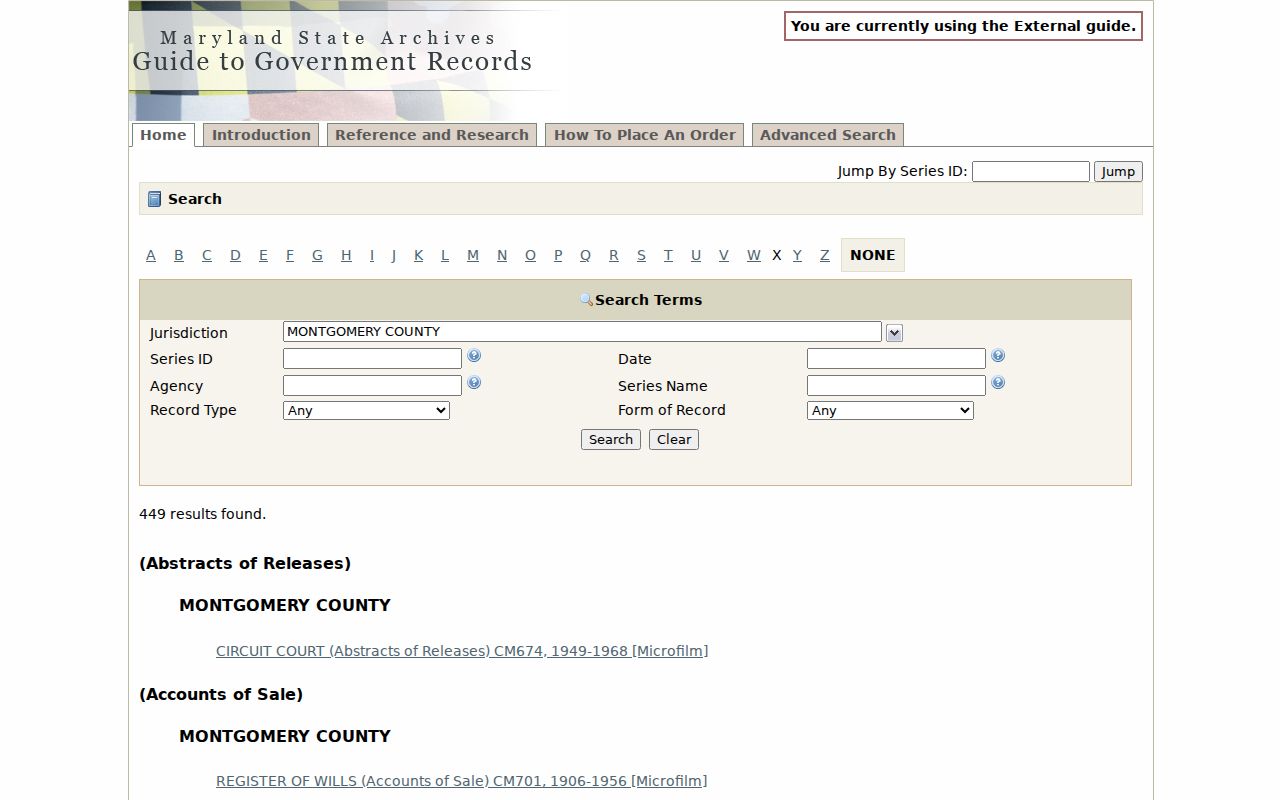
Montgomery County land books date to July 1777. Maryland State Archives equity indexes reach even wider, spanning 1777 to 1981. Those dates make a long address history possible. Early Bethesda records may still carry a different locality name for the same place. The State Archives county guide is the state-level route. It covers Montgomery marriage series, land and equity indexes, and older government records, bridging a directory lead to county and state evidence when the printed shelf ends. The Maryland State Archives Montgomery County guide identifies the historical series and record routes.
Identify the right series before requesting a copy. An index is a bridge to the original book or image, not a replacement for examining the record itself.
Bethesda City Directory Leads at MDGS
The Maryland Genealogical Society adds a statewide layer. A Bethesda directory name sometimes needs a second lead. Its searchable holdings include church records and eighteenth-century tax-list transcripts. Maryland will and probate indexes, member family trees, and journal indexes round out the shelves. The society also points researchers to selected collections. These sit at the Maryland State Archives and the Maryland Center for History and Culture, beyond its own shelves. A published abstract or family tree is a discovery tool. Verify any pivotal fact against the county or state record itself.
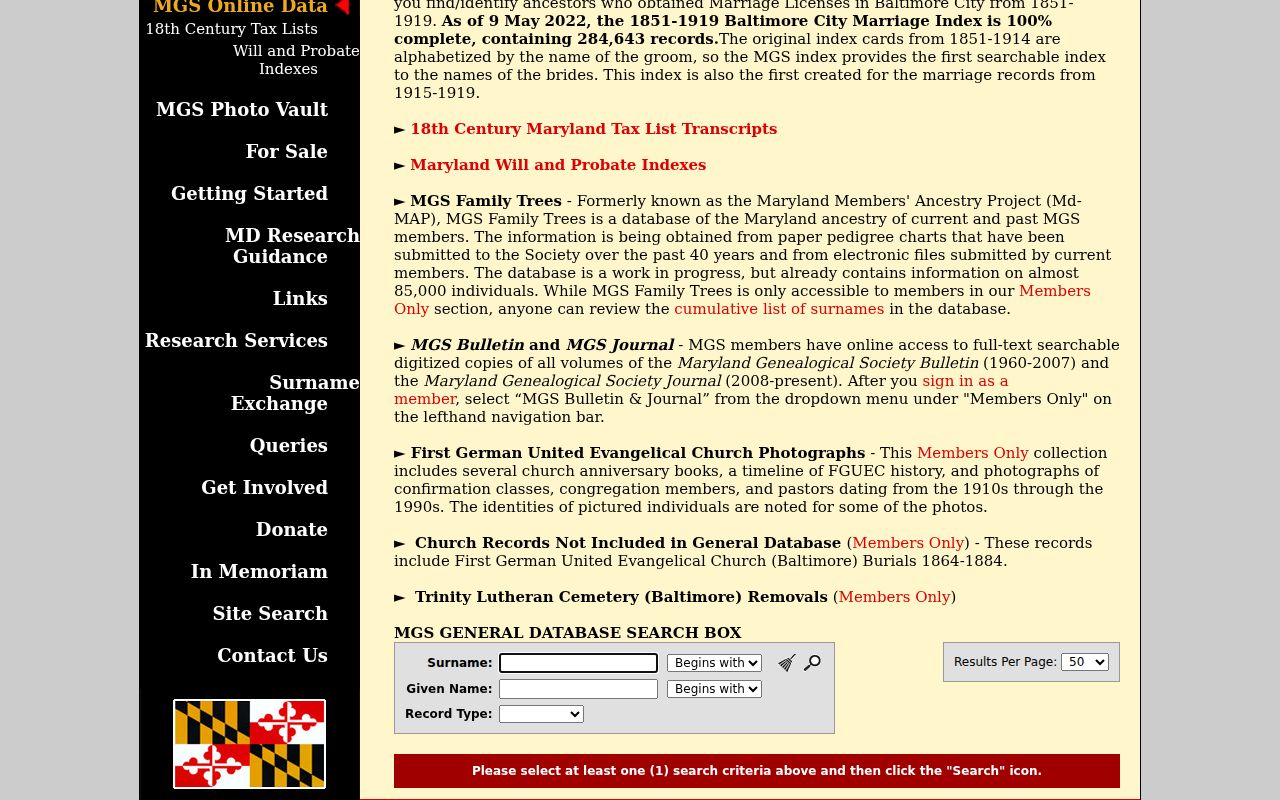
The Maryland Genealogical Society databases show the available index and publication routes.
The statewide layer works best after the directory supplies a name variant, church, probate clue, or time period to test. It cannot fix an address by itself. Use it to find leads, not proof of residence.
Bethesda Household Endpoints and Records
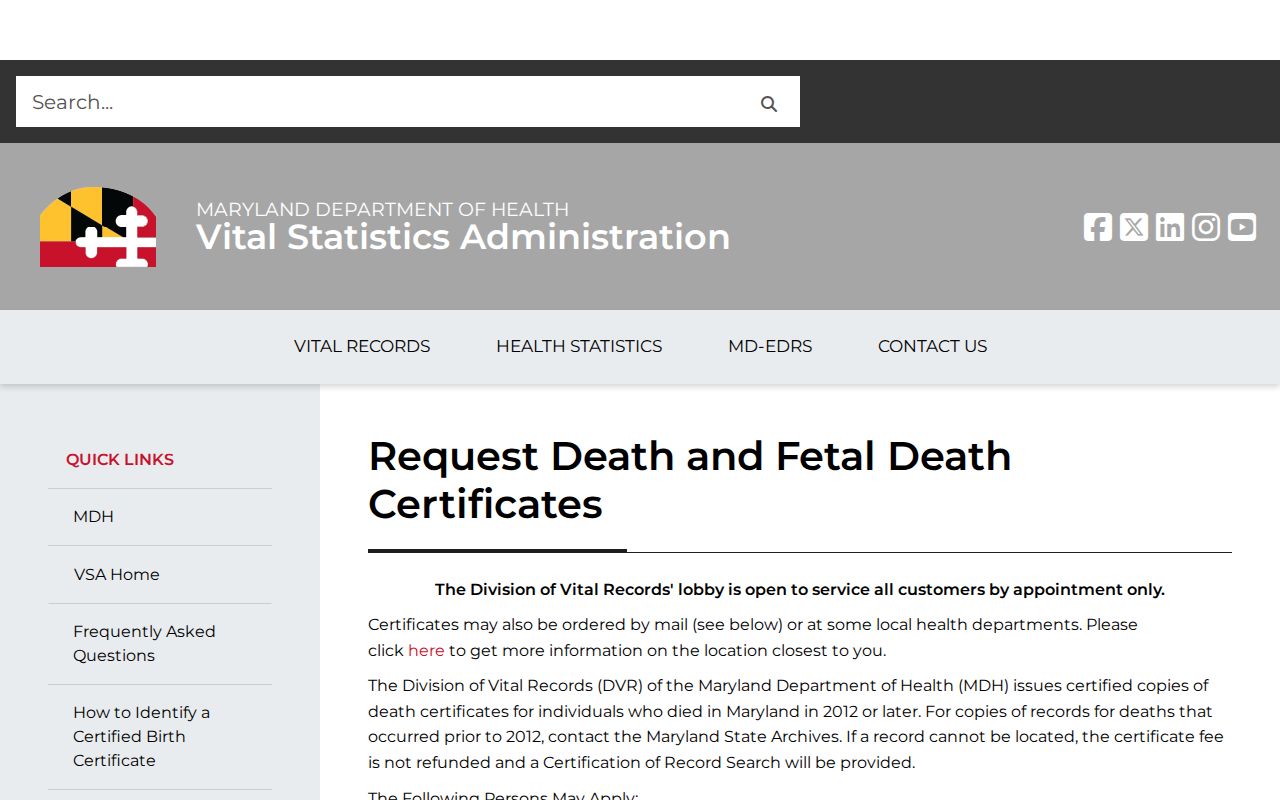
When a household trail ends, newspapers, obituaries, probate, church records, and vital-record routes may supply a date or family connection. Maryland death certificates follow a split. The Department of Health holds deaths from 2012 forward. Older historical death material routes to the State Archives. Eligibility and access rules differ from an ordinary directory search, so request a record only through the custodian’s stated process. The Maryland death-record service explains the current state route and the historical date split.
Compare the event date with State Archives guidance first. Add the local newspaper route next. A directory listing points the way, but it replaces neither an eligible record request nor a verified obituary.